An impaired driving stop in British Columbia can affect a person’s life almost immediately. Police may take action at the roadside; the vehicle may be impounded; and a criminal investigation may begin before the driver has had a chance to seek legal advice. A licence suspension can then create problems with work, insurance, family obligations, travel, and future opportunities.
At Jaswal & Krueger Criminal Defence Lawyers, we represent clients facing alcohol- and drug-related driving allegations across British Columbia. We help clients understand what the police have done, what deadlines apply, and how the evidence should be reviewed.
Canadian impaired driving law applies to alcohol, drugs, and combined use. A person can be charged after driving, attempting to drive, or having care or control of a vehicle while impaired. Criminal charges can also follow if testing shows 80 milligrams or more of alcohol in 100 millilitres of blood, or a prohibited level of certain drugs.
Penalties for Impaired Driving in British Columbia
Immediate Roadside Prohibitions for Alcohol or Drug-Affected Driving
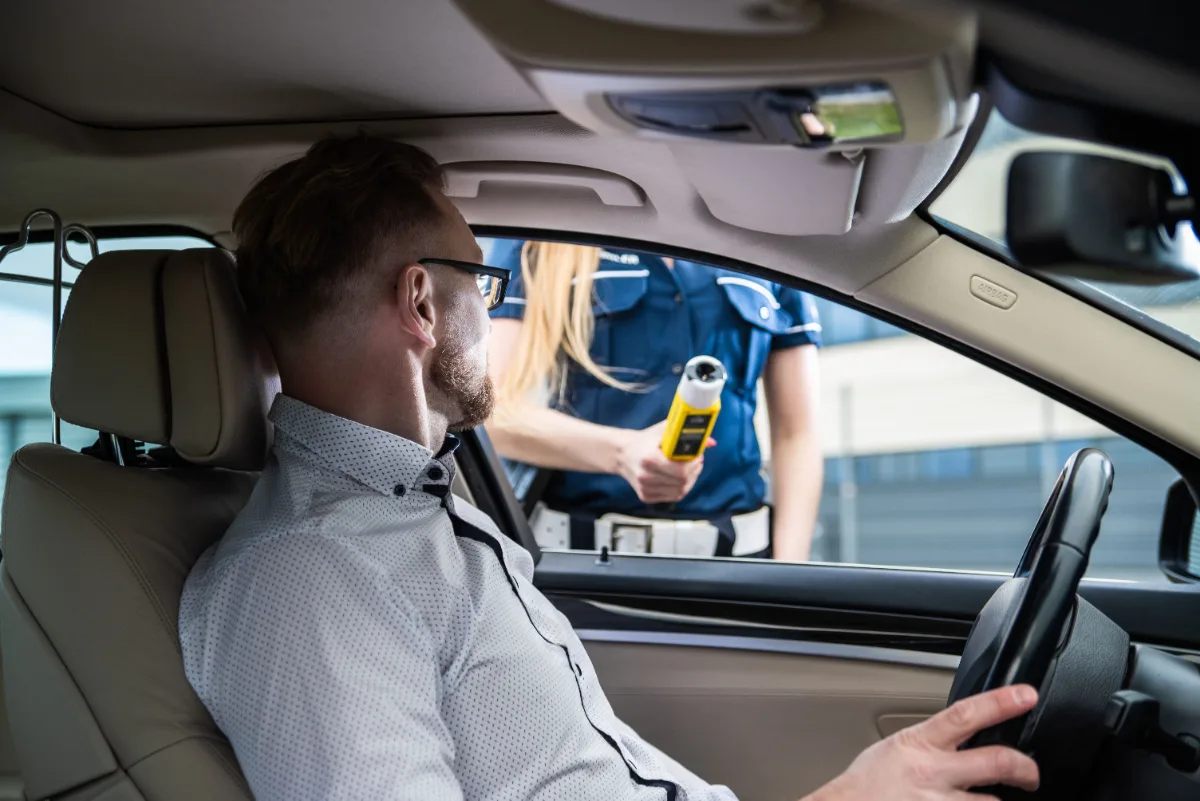
In British Columbia, a police officer can issue an Immediate Roadside Prohibition (IRP) if there are reasonable grounds to believe that a driver is impaired by alcohol or drugs. That decision may be based on a breath sample, an oral fluid sample, observations at the roadside, or the results of a standard field sobriety test.
The process can move quickly. An IRP may lead to a licence suspension ranging from three to ninety days, depending on the level of impairment detected and the circumstances of the stop. Vehicle impoundment may also apply, and drivers generally have seven days to request a review.
Criminal Offences Under the Criminal Code
A roadside prohibition is separate from a criminal impaired driving charge, and under the federal impaired driving laws, a person found driving while impaired may face prosecution by summary conviction or indictment. A conviction usually results in a license suspension of at least 1 year, fines, and potential jail time.
If an incident causes bodily harm or death, the penalties can increase to a maximum life imprisonment charge. A conviction for impaired driving causing death or serious injury can change a person’s life forever. A criminal conviction also remains on your record, affecting travel, insurance, and employment. It is not only about the immediate punishment but the long-term impact that follows.
Penalties: Suspensions, Fines, and Interlocks
Under provincial rules, penalties for impaired driving are strict and designed to limit access to the road. Penalties may include a license suspension lasting from 24 hours to 90 days and fines that can exceed $4,000 for a first offence.
Many drivers must complete an education or treatment program before their license is reinstated. The Responsible Driver Program and the Ignition Interlock Program are common requirements, and those convicted criminally may also be ordered to install an ignition interlock device, which prevents a car from starting until a clean breath test is given. These measures are meant to change behaviour, but they also carry high personal and financial costs.
Graduated Penalties and Zero Tolerance for New Drivers
Novice drivers under British Columbia’s Graduated Licensing Program face zero tolerance for alcohol or drugs. Even trace amounts can lead to a suspension or vehicle impoundment. Commercial drivers and commercial vehicle drivers are also subject to strict limits due to the public safety risks involved.
Penalties increase with each subsequent offence. A driver may face higher fines, longer licence suspensions, extended vehicle impoundment, and other restrictions. In certain cases, a lifetime suspension may apply. These penalties are meant to address repeat impaired driving, but they can also create serious consequences for drivers who did not realize how strict the rules were.
Drug-Impaired Driving and Mixed Impairments
Impaired driving by drugs is treated with the same seriousness as alcohol impaired driving. Police can conduct a standardized field sobriety test and then a drug recognition evaluation if they suspect a driver is under the influence of a prohibited drug. This evaluation can include physical coordination tests, eye examinations, or a review of recent drug use.
If THC levels measure between 2 ng and 5 ng per ml of blood, fines can reach $1,000. Above 5 mg, the penalties rise. The primary psychoactive component in cannabis can reduce a person’s ability to judge distance and reaction time. Other substances, including prescription and illegal drugs, can have similar effects. BC’s laws now recognize that any substance that impairs driving is treated as driving under the influence.
Insurance, Criminal Record, and Travel Implications
The consequences of DUI charges can reach well beyond the immediate court process. A criminal impaired driving conviction can affect insurance premiums, and the Driver Risk Premium may add hundreds or even thousands of dollars to a driver’s costs over time.
In some cases, people must complete a treatment program or roadside licence suspension education before they can regain full driving privileges. Drivers who rely on a commercial vehicle licence may also face employment problems if they are unable to drive. International travel can become more difficult as well, since some countries may refuse entry to people with impaired driving convictions. For many drivers, the damage to reputation, income, and mobility lasts longer than the suspension itself.
Reviews and Legal Strategy
Drivers usually have seven days to request a review after an administrative prohibition is issued. Missing that deadline can mean losing the chance to challenge the suspension. At Jaswal & Krueger, we handle administrative penalty reviews by examining the evidence, procedure, and the officer’s decision.
For criminal charges, early legal advice is important. We review the breath sample results, the timing of the stop, the grounds for reasonable suspicion, how evidence was handled, and whether the standard field sobriety test was performed properly.
A defence may involve challenging the testing, the stop, or the steps taken by police. Every case depends on the details, and those details should be reviewed carefully before decisions are made.